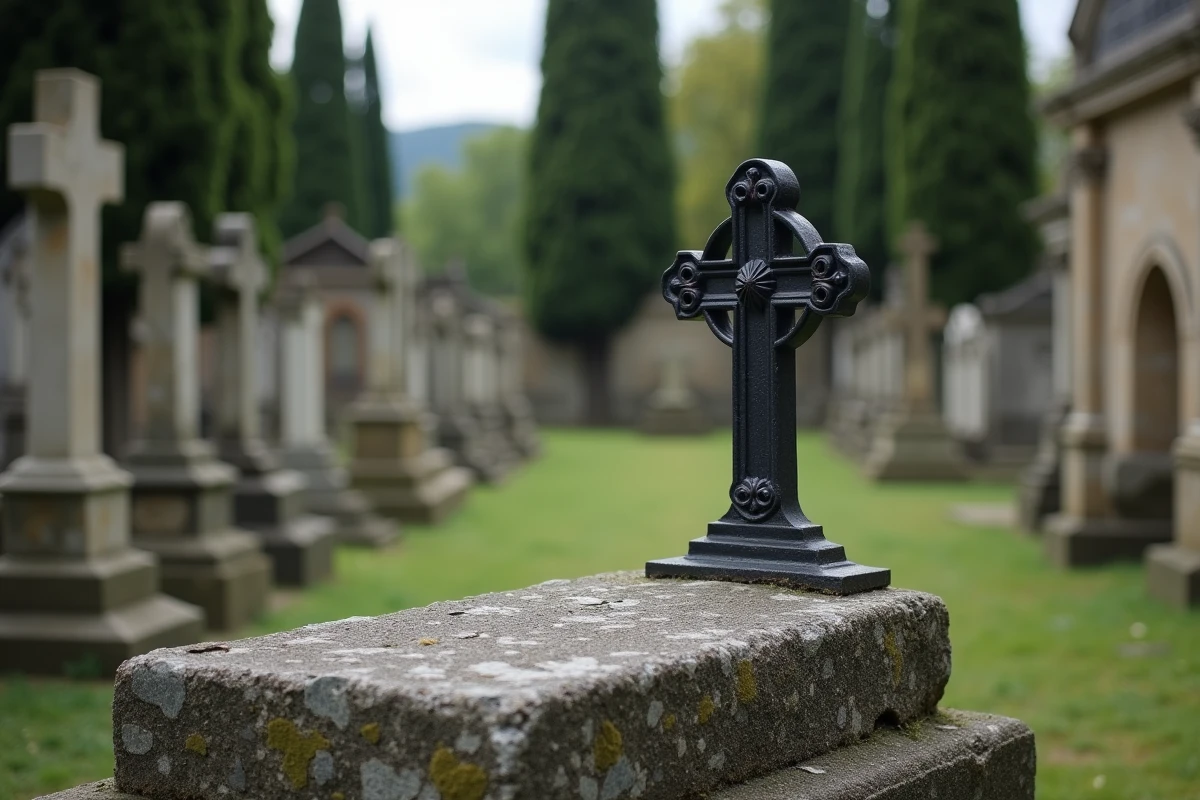
The funeral cross remains the most common visual marker in French cemeteries, including on the graves of families who are minimally or not at all religious. This observation raises questions: does the cross placed on a grave still represent a religious gesture, or has it become a cultural reflex passed down from generation to generation? The regulatory framework, available materials, and practices are evolving, which changes how families approach this decision.
Funeral Crosses in Secular Cemeteries: A Cultural Marker More Than a Religious One
Since the early 2020s, several public funeral services (Toulouse, Lyon, Nantes) have reported an increase in requests for simplified crosses, without a relief Christ, sometimes simply stylized. The families involved often describe themselves as “non-practicing but of Christian culture.” The cross no longer functions as a profession of faith but as a familiar visual reference in the cemetery space.
This trend is also evident in memory gardens and municipal cremation spaces, where the discreet cross is gradually replacing traditional models. The act of placing a cemetery cross on a grave is thus part of a family memory logic rather than liturgy.
This evolution raises a regulatory question. Since the Council of State’s opinion in 2017 on secularism in cemeteries, several municipalities have moved crosses located in common areas to zones identified as confessional. Administrative court decisions between 2018 and 2023 have confirmed this interpretation.
In contrast, the cross placed on an individual concession remains free: the concessionaire chooses the symbol they wish, without restrictions on shape or size, as long as the cemetery’s internal regulations are respected.
Fixing and Height of a Grave Cross: Real Technical Constraints
Competitors often detail materials without addressing the question that concretely blocks families: how does the cross stay on the monument, and what limits does the cemetery impose?
Cemetery Regulations and Authorized Height
Each municipality sets the maximum height of funeral monuments, including crosses, in its internal regulations. This limit varies significantly from one cemetery to another. Before any purchase, it is essential to consult the town hall or the cemetery caretaker to know the authorized burial height for the intended concession.
A monument that exceeds the regulatory height may be subject to a notice of removal. Checking this point before ordering avoids additional costs for modification or replacement.
Fixing Methods According to the Support
The fixing method depends on the type of monument and the material of the cross. Three configurations are most common:
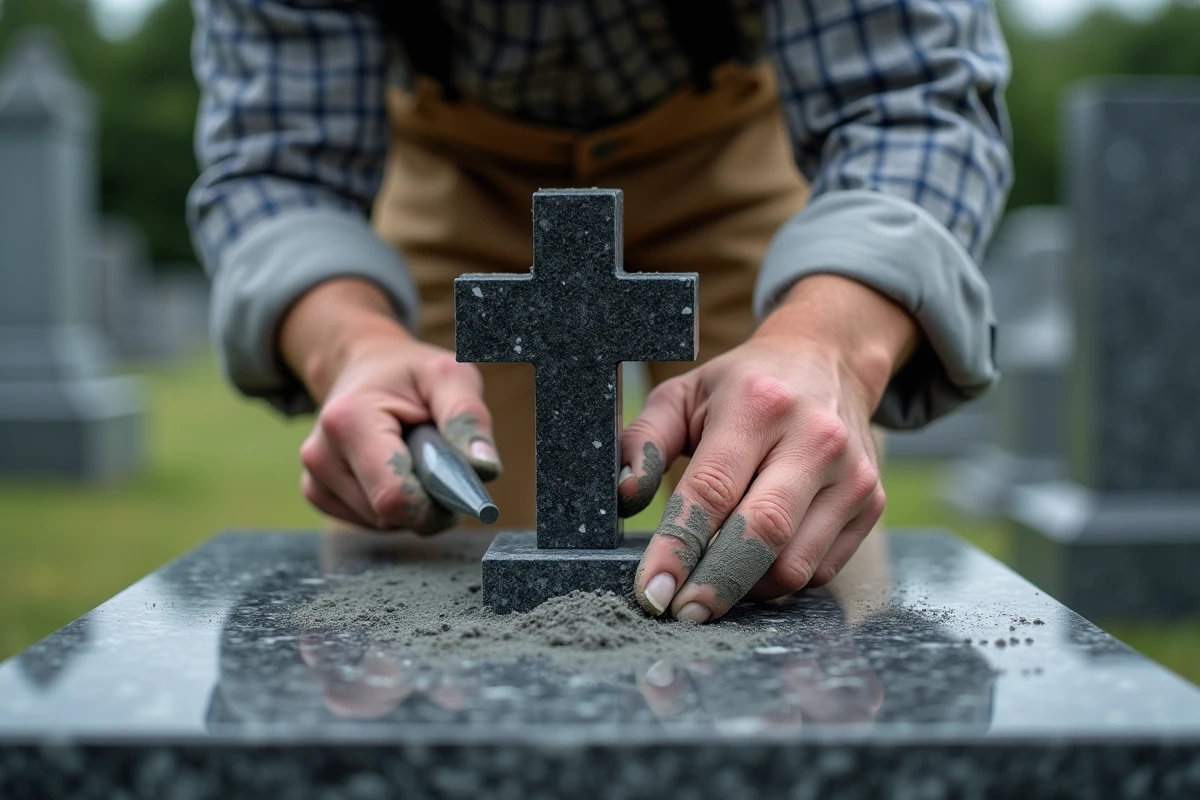
- Stone or granite cross placed on a base: it is sealed with mortar or fixed with stainless steel dowels in the stele. This assembly requires precise drilling and a drying time before any stress is applied.
- Bronze cross attached to a gravestone: the fixing is done by threaded tenons passing through the slab, secured with nuts on the underside. Since bronze is heavy, a minimum of two anchoring points is necessary to prevent tipping.
- Cast iron or wrought iron cross planted at the head of the grave (soft ground): a buried concrete base ensures stability. Without this base, frost and thawing cause gradual dislodgment over the winters.
A funeral stonemason performs the installation in most cases. Some families install a lightweight cross (wood, resin) themselves, but any intervention on the slab or stele requires a professional to avoid cracking the monument.
Funeral Cross Materials: Balancing Durability and Budget
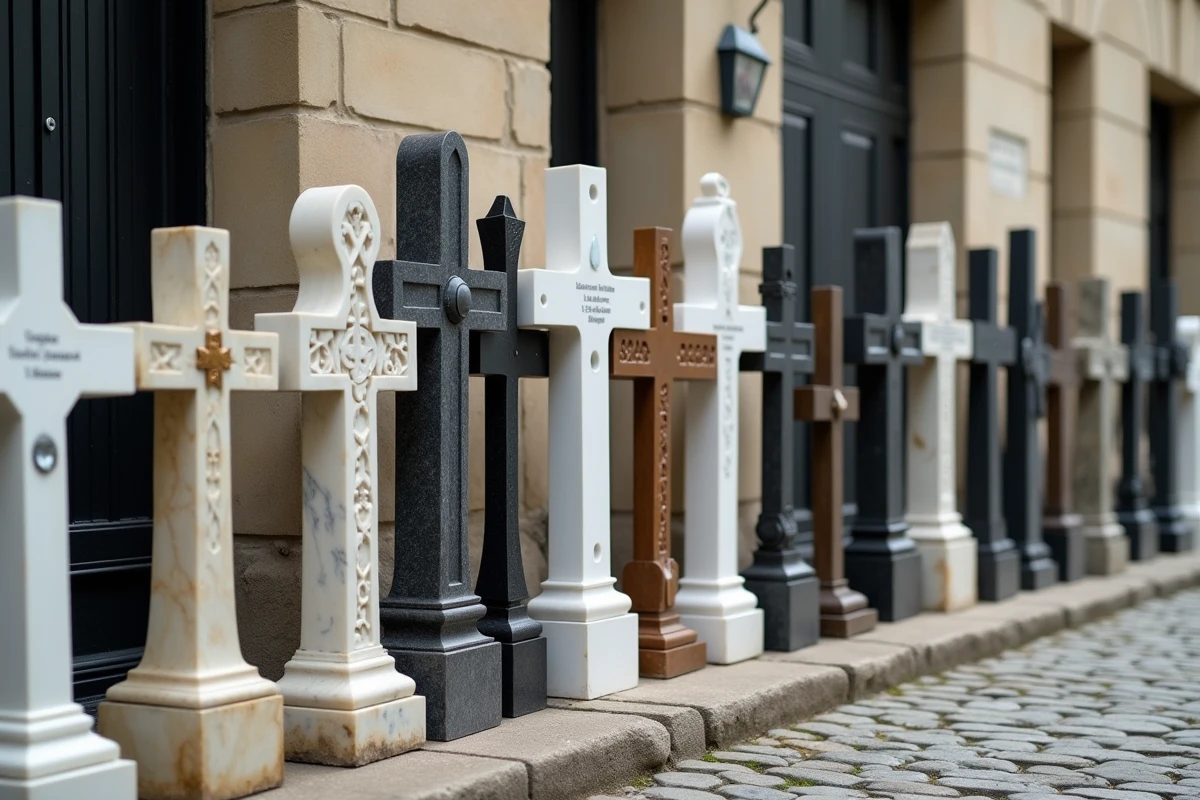
The choice of material determines the appearance, longevity, and maintenance of the cross. Field feedback varies on this point depending on regions and local climatic conditions.
Granite and Natural Stone
Granite remains the most common material for cemetery crosses. It withstands frost, UV rays, and requires only cleaning with clear water. Limestone, being softer, patinas over time and can degrade in areas with high humidity or saline atmosphere.
Bronze and Cast Iron
Bronze develops a green patina (verdigris) that naturally protects it from corrosion. Cast iron, being less expensive, rusts if its surface treatment (paint, varnish) is not renewed regularly. Old cast iron crosses, often very ornate, require specific restoration: sandblasting, anti-rust treatment, finishing paint.
Wood and Resin
The wooden cross (oak, larch) is suitable for temporary graves or for families wanting a natural look. Its lifespan remains limited to a few years without treatment. Resin mimics stone at a lower cost, but UV rays alter its color within a few seasons.
Cross with or without Christ: A Choice That Commits the Family
The presence of Christ (crucifix) or its absence (naked cross) is not an aesthetic detail. For practicing families, the crucifix affirms resurrection. For others, the naked cross is sufficient to mark cultural belonging without strong liturgical connotation.
Some crosses incorporate personalized elements: porcelain photo medallion, engraved plaque, floral motifs. These additions do not have any specific regulatory constraints, provided they respect the total authorized height and do not encroach on neighboring concessions.
The trend observed in municipal cremation cemeteries confirms a shift: the funeral cross is becoming a memorial personalization object as much as a religious symbol. The catalogs of funeral stonemasons reflect this evolution, with increasingly geometric models, sometimes close to contemporary design, coexisting with classic Latin shapes.
The choice of a cemetery cross commits the family for several decades. Consulting the cemetery regulations, checking the compatibility of the material with the local climate, and anticipating future maintenance remains the most reliable sequence to avoid having to replace an ill-suited element a few years after installation.