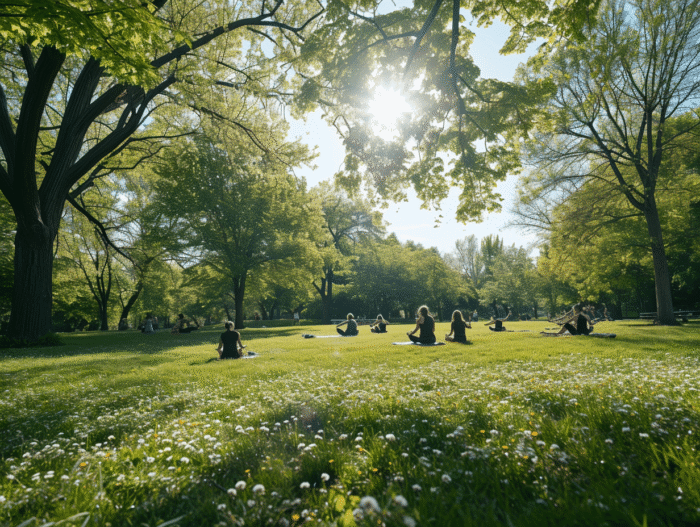
In the heart of modern cities, green spaces are becoming essential havens of peace for the mental and physical health of urban dwellers. The greenery that weaves between skyscrapers offers a welcome breath of oxygen in the often overloaded atmosphere of urban life. Parks, public gardens, and even green roofs are not just aesthetic; they play a crucial role in individuals’ well-being. Nature in the city is an oasis that allows for rejuvenation, stress reduction, and improved concentration.
The therapeutic virtues of green spaces on our well-being
The health crisis has been a significant revealer of the therapeutic virtues of green spaces on the population. Public gardens, urban parks, and even suburban forests have become essential breathing zones. While the benefits of nature on our mental health and physical well-being are well established, the trend of “forest bathing” prescriptions by Canadian doctors illustrates this recognition of nature’s positive influence on our psychological balance.
Join the movement: integrate green sessions into your routine. Green spaces encourage physical activity, providing a conducive setting for walking, jogging, or outdoor yoga. These practices not only strengthen the body but also the mind, thus improving quality of life. Consider therapeutic gardens, designed to stimulate the senses and promote healing, as allies on the path to sustainable well-being.
Beyond personal aspects, green spaces also contribute to social cohesion. They are places for meetings, intergenerational and cultural exchanges, strengthening community ties and the sense of belonging to a neighborhood or city. The living environment is improved, offering a setting where nature is invited and integrated into the urban fabric.
Nature also has a direct impact on employee productivity. Pharmanco, a pioneering company in the health sector, has integrated green spaces into its infrastructure to promote concentration and well-being among its employees, with tangible results on work efficiency. The link between a work environment enriched with nature and better mental health for employees is now recognized. Take note: a green working environment can become a vector of success for your company.

The positive environmental impact of urban green areas
The issue of urban green spaces goes beyond the simple framework of individual well-being to fit into a broader approach to ecological and environmental transition. Parks, gardens, and green corridors play a crucial role in reducing pollution in the air and noise. They act as lungs for our cities, filtering pollutants and supplying urban air with oxygen. Air quality is significantly improved, directly contributing to the health of city dwellers.
These chlorophyll zones also help moderate urban temperatures. Indeed, the presence of trees and grassy areas helps combat the heat island effect, a phenomenon exacerbated by concrete and asphalt that absorb and re-emit heat. Green spaces function as natural thermal regulators, providing considerable comfort during increasingly frequent heat waves.
In this perspective, the Healthy Living Spaces program aims to place nature and health at the heart of cities, recognizing the importance of biodiversity in urban environments. This program aims to create environments where nature is fully integrated, promoting not only the health of residents but also that of the entire urban ecosystem. Nature, far from being a decorative element, becomes a fundamental component of contemporary urban planning, essential for the resilience of cities in the face of current climate challenges.