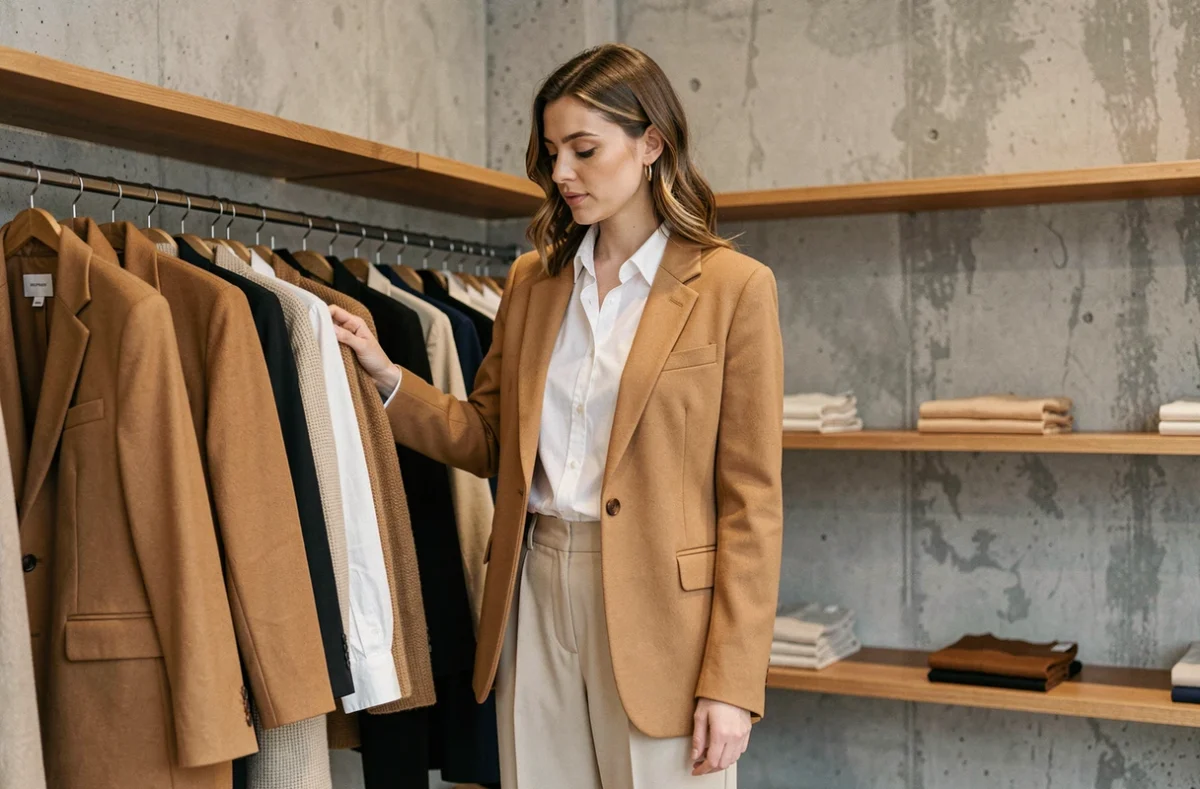
Refreshing your seasonal style doesn’t necessarily mean buying a whole new wardrobe. Refashion has observed an increase in the volume of second-hand clothing sold between 2024 and 2025, a sign that people are now putting their wardrobes together differently.
Current fashion trends, from autumnal colors to updated cuts, work just as well with new pieces as with second-hand finds or clothes already in your wardrobe. Taking stock of what really changes from one season to the next helps separate the useful from the unnecessary.
Seasonal wardrobe: new, second-hand or existing pieces—which should you choose?
France’s second-hand fashion market is still dominated by peer-to-peer platforms, with brands accounting for only a small share. This imbalance changes how we can approach the season’s fashion trends: statement pieces (a structured blazer, straight-leg jeans, a knitted dress) are often available at reduced prices through these channels.
| How you acquire it | Access to seasonal trends | Average cost per item | Environmental impact |
|---|---|---|---|
| Buying new (retailer) | Immediate, with a wide choice of colors and cuts | High | Highest (production, transport) |
| Second-hand (platforms) | Variable, depending on available stock | Half price or less | Low (reuse) |
| Items already owned (restyling) | Limited to what’s in your wardrobe | None, or the cost of alterations | Almost none |
| Repair or upcycling | Can be tailored to the trend you’re after | Low (sewing supplies, tailor) | Very low |
The table highlights a simple point: second-hand shopping offers access to trends at a lower cost and with less impact. For basics (jeans, a plain sweater, a coat), your existing wardrobe often has you covered without needing to buy anything new.
Analyses published on fashion-blog.fr confirm that seasonal looks are built first from what you already own, then completed with one or two carefully chosen pieces.

Trending fall-winter colors and prints: update your wardrobe without replacing everything
This season, the runways are putting burgundy, chocolate brown and khaki among the leading shades. Red remains a standout color, worn head to toe or in accents (accessories, a scarf, a bag). These shades share one advantage: they pair easily with neutrals already found in most wardrobes.
Use neutrals as the foundation of your look
Black trousers, dark-wash jeans or an ecru sweater make a solid foundation. All it takes to refresh the look is one seasonal color. A red or burgundy accessory is enough to update an outfit built around basics.
As for prints, polka dots and reworked denim are appearing across several collections. Before buying a new printed piece, check whether a patterned shirt or a denim jacket forgotten at the back of your closet could already do the job. Denim, by nature, ages well and gains character over time.
Dyeing and alterations to match the season’s palette
Dyeing a light-colored garment burgundy or khaki costs just a few euros with fabric dye from a big-box store. It’s a practical way to bring autumn colors into your wardrobe without buying anything new. Tailors also offer fit adjustments (shortening a coat, taking in a blazer) to bring an older piece in line with today’s silhouettes.
Textile environmental labeling: another factor to consider alongside fit
French regulations have introduced environmental cost labeling for clothing. This environmental score is becoming a point of comparison alongside price and fabric. The European Union is also moving toward stricter requirements for unsold goods and textile ecodesign, although the detailed rules have yet to be finalized.
In practice, this regulatory framework encourages shoppers to compare two similar pieces not just by their cut or color, but also by their footprint. A new faux-leather jacket with a high score becomes less appealing next to a second-hand genuine leather blazer, whose additional impact is almost zero.
- Before buying new, check the environmental label when available to compare two pieces with a similar style
- Choose durable materials (wool, heavyweight cotton, linen) that can withstand several seasons of wear and washing
- Think of repairs as a style choice as much as a way to save money: mending jeans or replacing a lining extends the life of a quality piece
Key fashion pieces for the season: which ones are worth buying?
Not all trends have the same staying power in your wardrobe. Some pieces last for several seasons, while others lose their appeal within a few months.
- The structured blazer: worn oversized or fitted, it works with jeans as well as a dress. It also resells well second-hand, a sign of its lasting style
- The midi skirt: featured on the runways for several seasons in a row, it has proved its staying power. There’s no need to buy another if you already have one in a neutral color
- The long wool coat: an investment that will see you through several winters. A second-hand coat in heavyweight wool is a better choice than a new coat in thin synthetic fabric
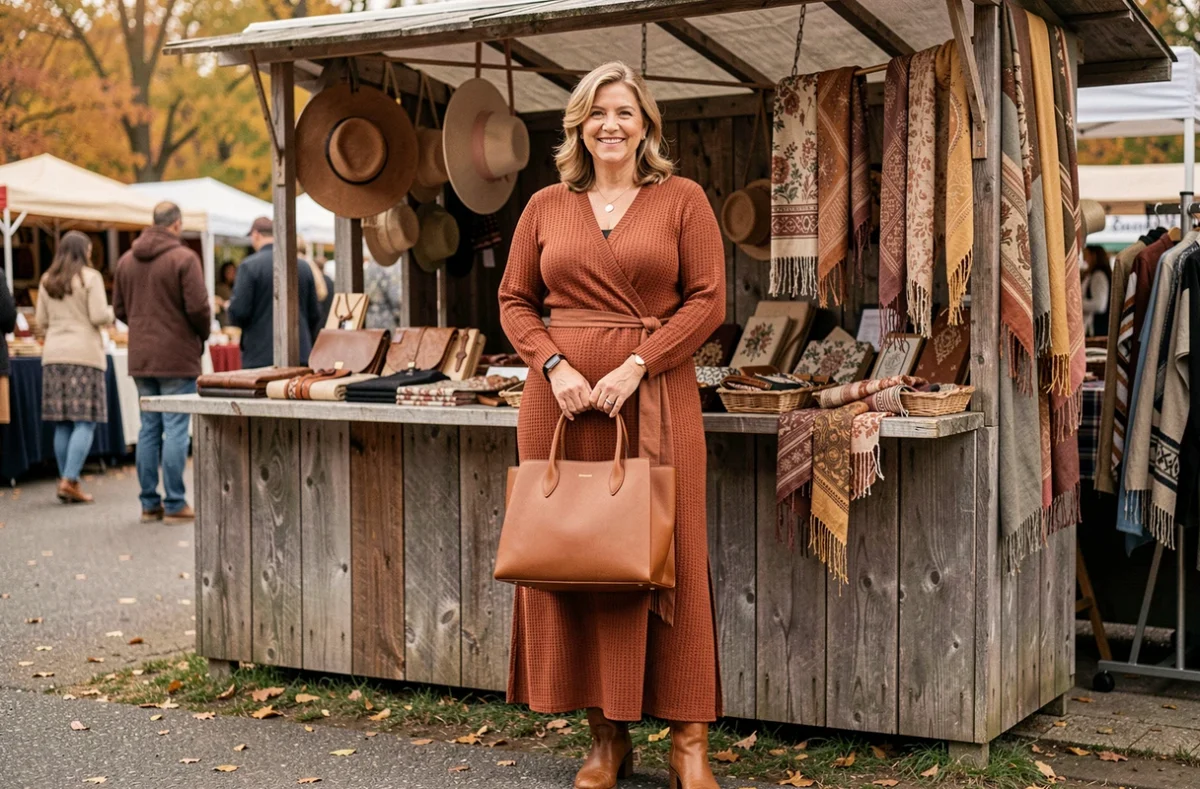
- Statement accessories (a colorful bag, a wide belt, a printed scarf): these are the pieces that refresh a look at minimal cost. Their small size makes them easy to find in thrift stores or on resale platforms
Denim, whether in the form of straight-leg jeans or a jacket, remains a constant from season to season. Investing in one well-fitting pair of jeans makes buying a new style every fall unnecessary.
Putting together a seasonal wardrobe means identifying the two or three pieces you’re genuinely missing, not replacing everything. Fashion trends offer a way to see what already works in your wardrobe. The most sustainable refresh is often the least noticeable: an alteration, a new accessory or a fresh color combination.