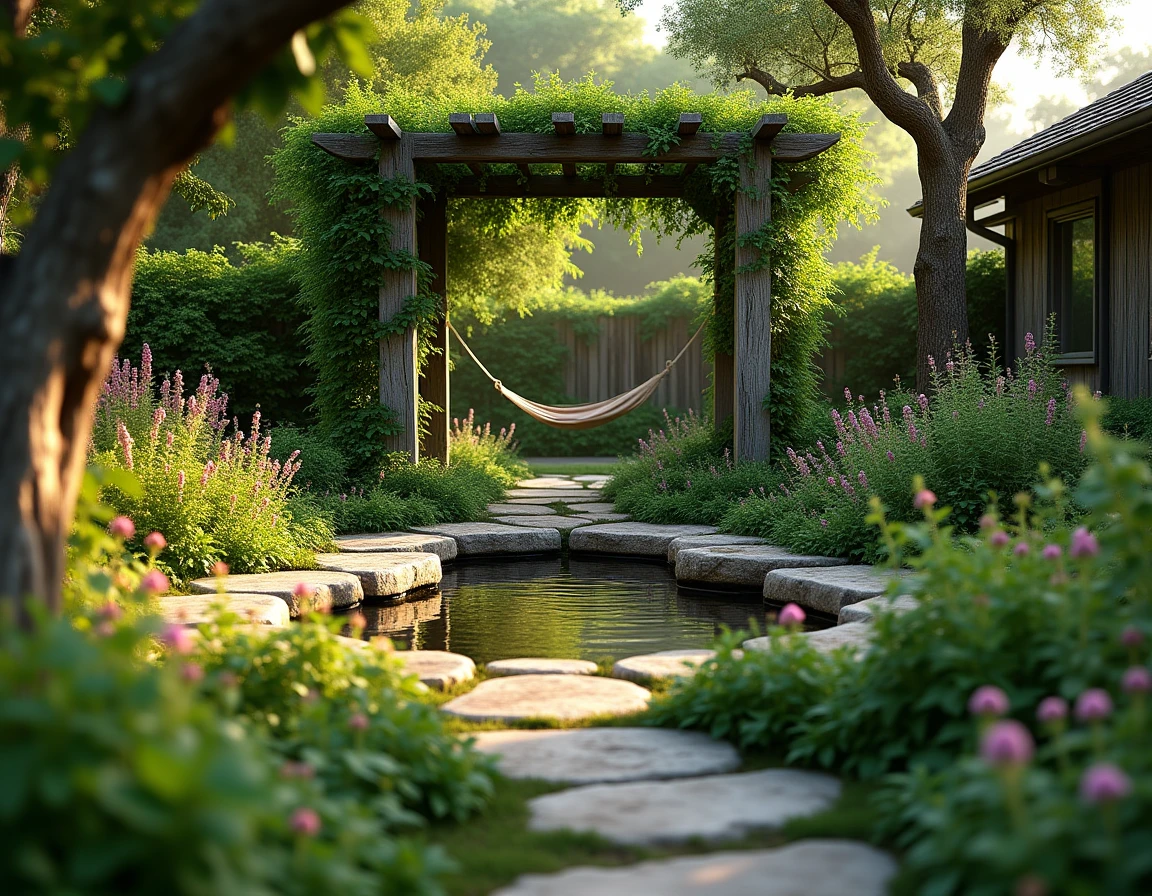
A garden that truly serves as a refuge is not achieved by simply stacking decorative purchases. It is obtained by solving concrete problems: too much sun, lack of privacy, a soil that heats up, plants that die in August. Here are ten tested ideas to transform your garden into a haven of peace, each starting from a specific constraint.
1. Dense layered planting for a naturalistic garden
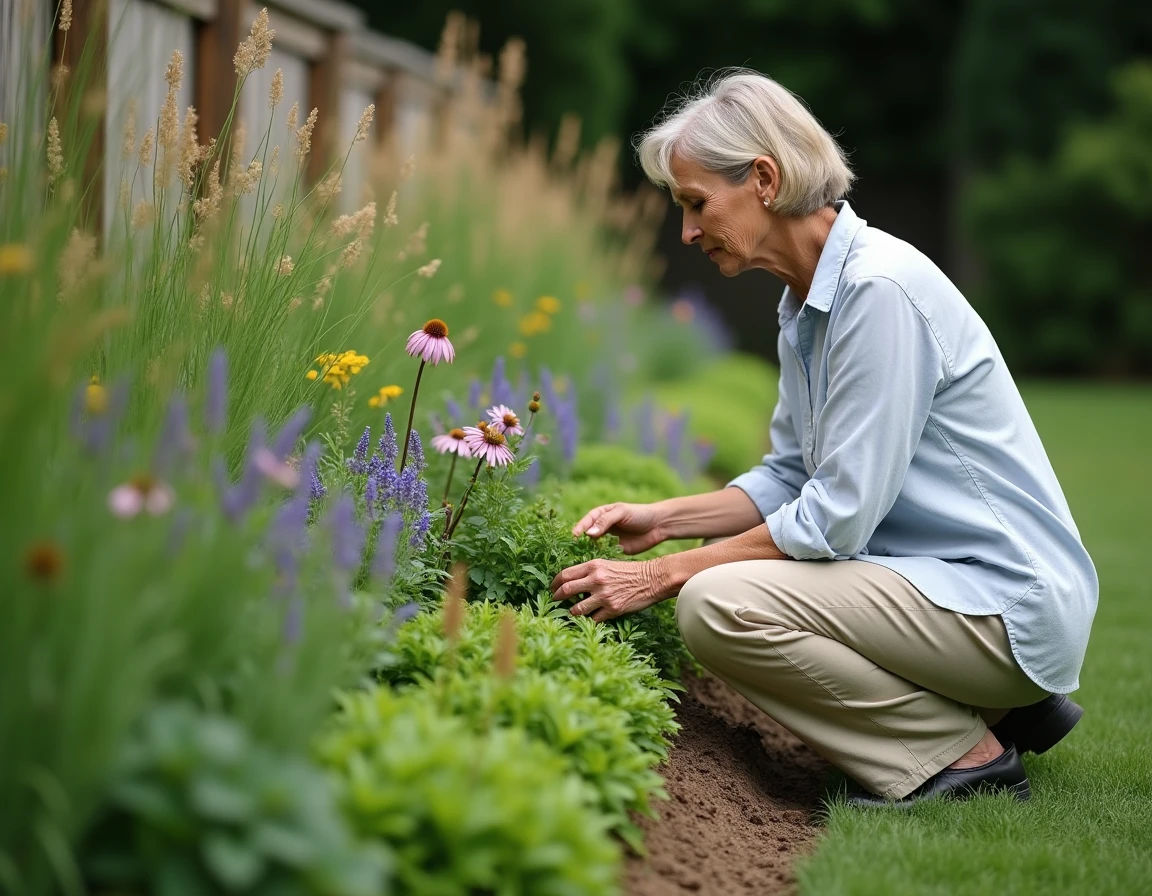
On a site exposed to full south with dry soil, the classic logic (a hedge, a lawn, three rose bushes) does not hold for long. Planting in dense layers reduces watering and maintenance because the soil remains covered at all times. We layer ground cover, medium perennials, and tall grasses to create a landscape effect without mowing.
The principle of the naturalistic garden is based on resilience: each plant occupies its niche and limits the space for weeds. Returns vary depending on soil type, but on clay soil as well as sandy ground, this approach yields visible results by the second season.
To explore other garden ideas on Les Embellies Déco, there are complementary approaches that combine vegetation and outdoor decoration.
2. Bioclimatic pergola for adjustable shading
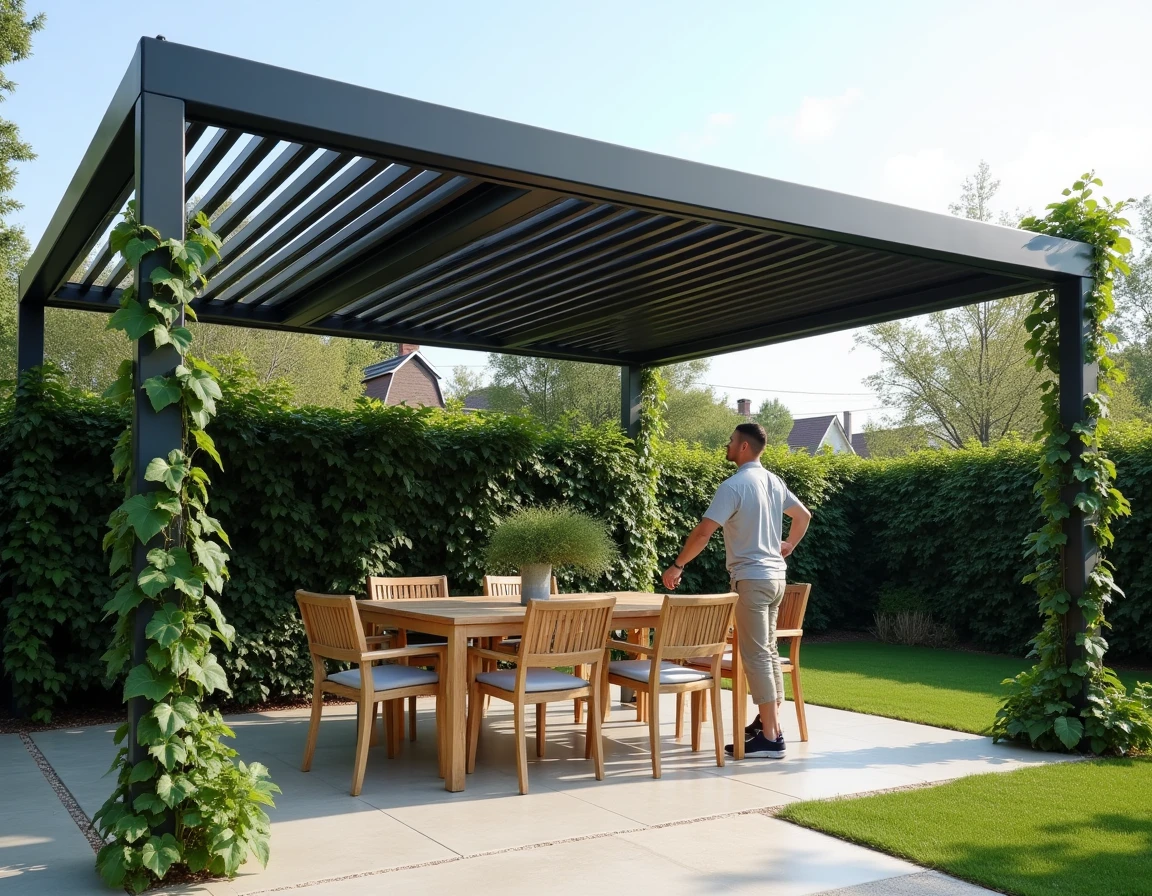
When the terrace becomes unusable from noon in summer, putting up an umbrella does not solve anything. A pergola with adjustable slats allows you to control shade and ventilation without blocking light in winter. You can choose between wood (warmer, requires regular treatment) and aluminum (zero maintenance, more contemporary look).
The orientation of the slats changes the comfort of an outdoor space. Slats open in the morning to capture light, closed vertically at noon, slightly open in the evening to allow air circulation. This is passive comfort, without fans or misters.
3. Paths made of permeable materials to structure the garden
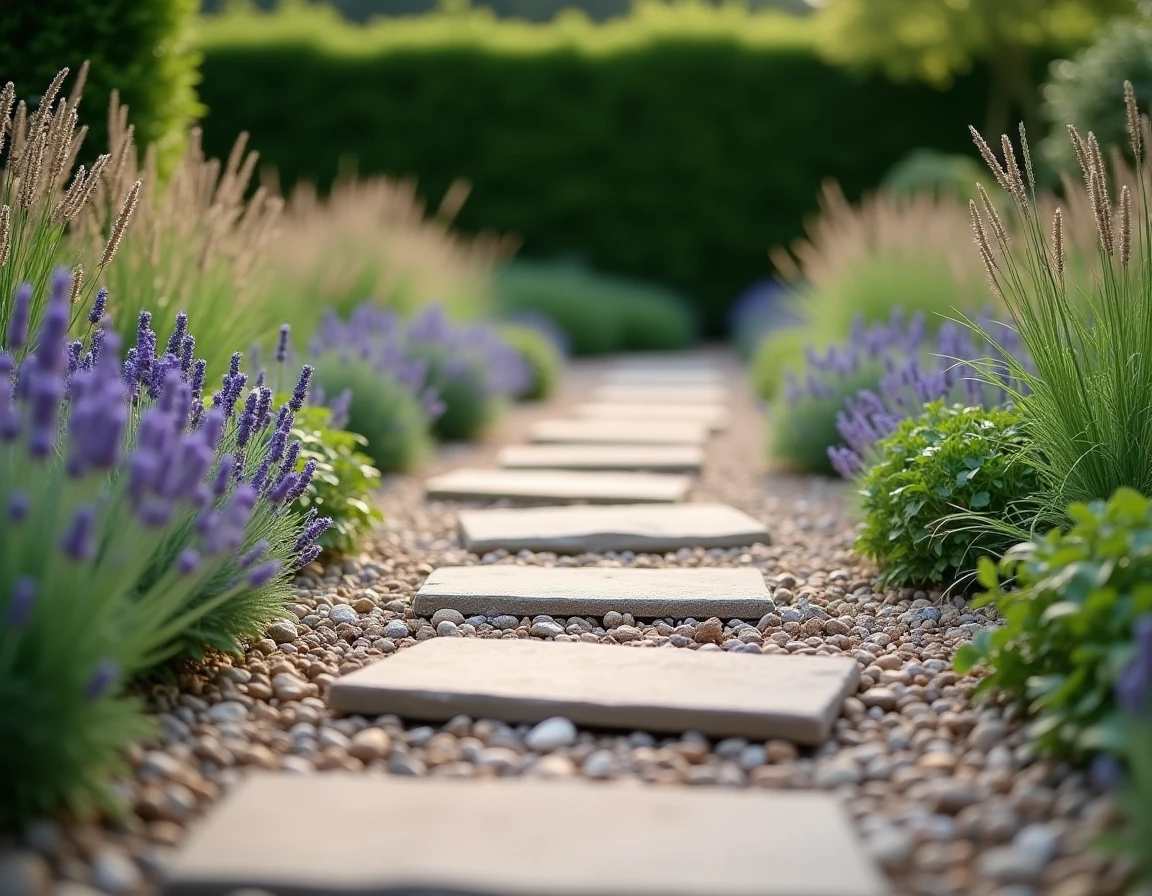
A garden without defined pathways is trampled haphazardly, and the grass gets damaged from frequent foot traffic. Installing paths made of stabilized gravel, stepping stones, or local wood structures the space without paving it.
The choice of permeable materials has a direct advantage: rainwater infiltrates instead of running off. You avoid puddles, recharge groundwater, and keep the soil cool around the flower beds. A well-defined path also guides the eye and gives an impression of space, even in a small garden.
4. Plant screen with climbing plants to create privacy
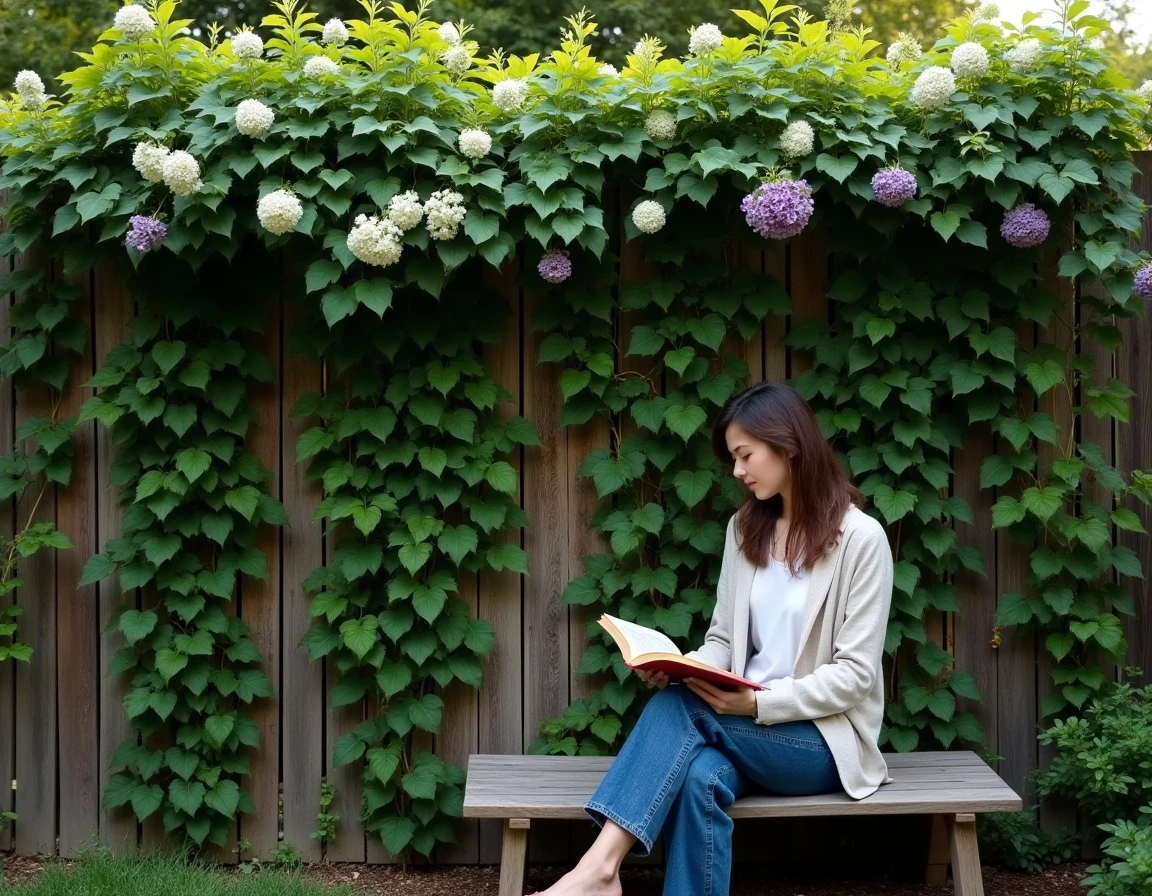
Facing neighbors kills the feeling of refuge. Rather than a rigid lattice, a screen of climbing plants on trellis filters views without closing off the space. Star jasmine, clematis, golden hops: each species has its own growth rate and foliage.
Fix the trellis a few centimeters from the wall or fence to allow air to circulate behind. In two seasons, the coverage is sufficient. Maintenance is limited to an annual pruning to contain the vigor of the fastest-growing climbers.
5. Ground relaxation area with outdoor cushions and outdoor rug

No need for a massive garden lounge to create a resting space. A UV-resistant outdoor rug, a few water-repellent cushions, and a blanket are enough. This type of setup is particularly suitable for small gardens where a sofa would take up too much space.
Set everything up under a tree or in the shade of a wall. The style remains flexible: you can move it, store it in case of a storm, and adapt the layout according to the number of people. It’s a low-cost arrangement that radically changes the atmosphere of an underutilized corner.
6. Natural pond or basin without pump for biodiversity
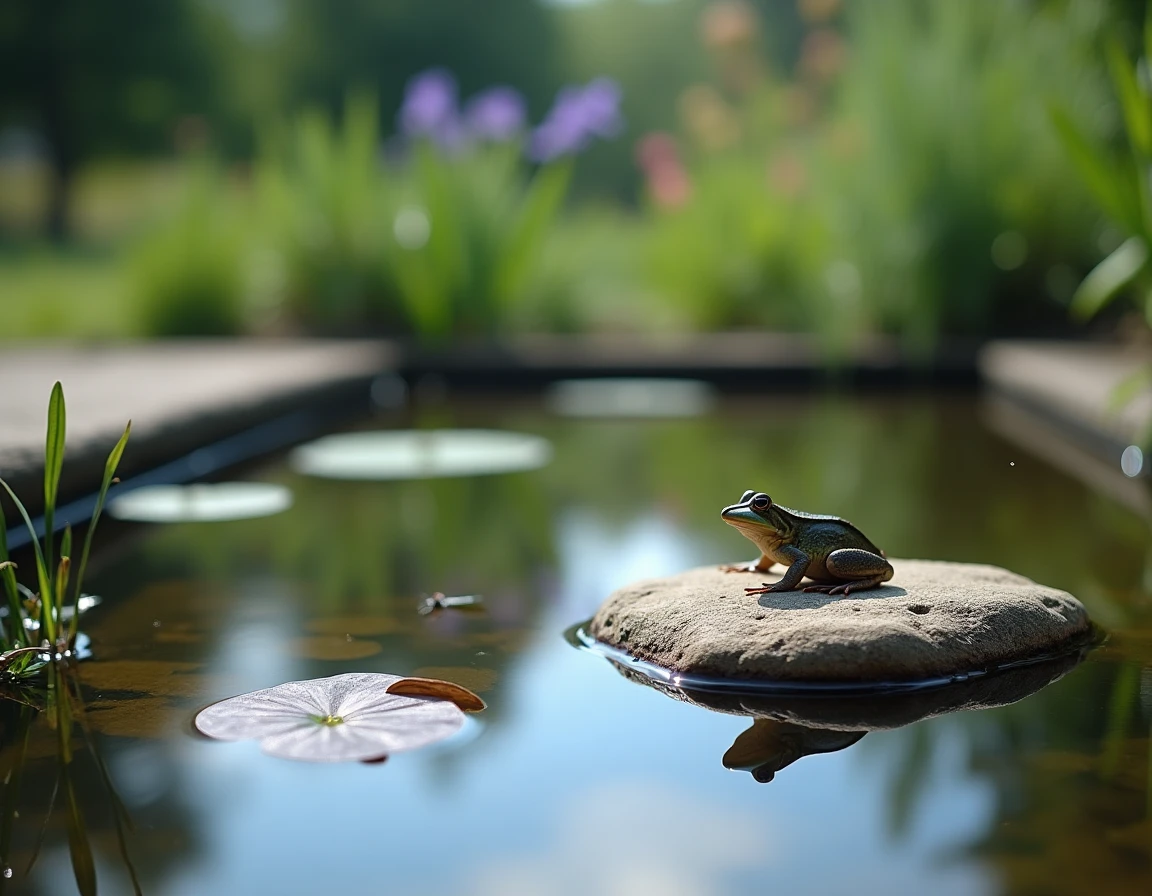
Water attracts life. A pond of a few square meters, even shallow, welcomes dragonflies, frogs, and birds within weeks. Use an EPDM liner, stack stones around the edges to create shelves, and plant local aquatic species.
A natural water point transforms the sound environment of the garden. The song of birds replaces street noise. No pump is required if you balance oxygenating and filtering plants well.
7. Low-intensity solar lighting to extend evenings
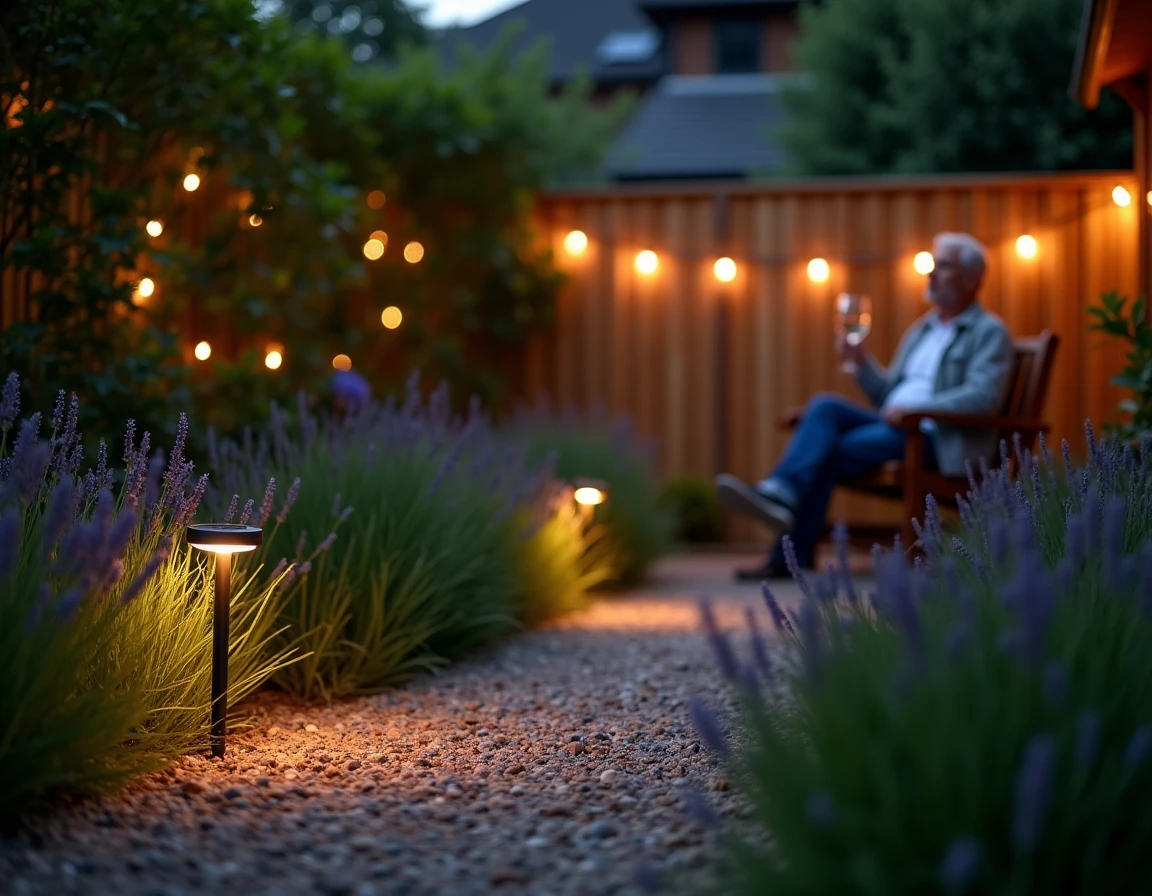
A garden pleasant by day but plunged into darkness at 9 PM means you stop using it for half the year. Solar posts along paths and a solar LED garland in the pergola extend the evenings without wiring.
Avoid motion-sensor floodlights, which are too aggressive. The goal is soft light, close to candlelight, that does not disturb insects or sleep. Placing light points at knee height creates discreet markers that are sufficient for comfortable movement.
8. Raised wooden vegetable garden for a nourishing garden
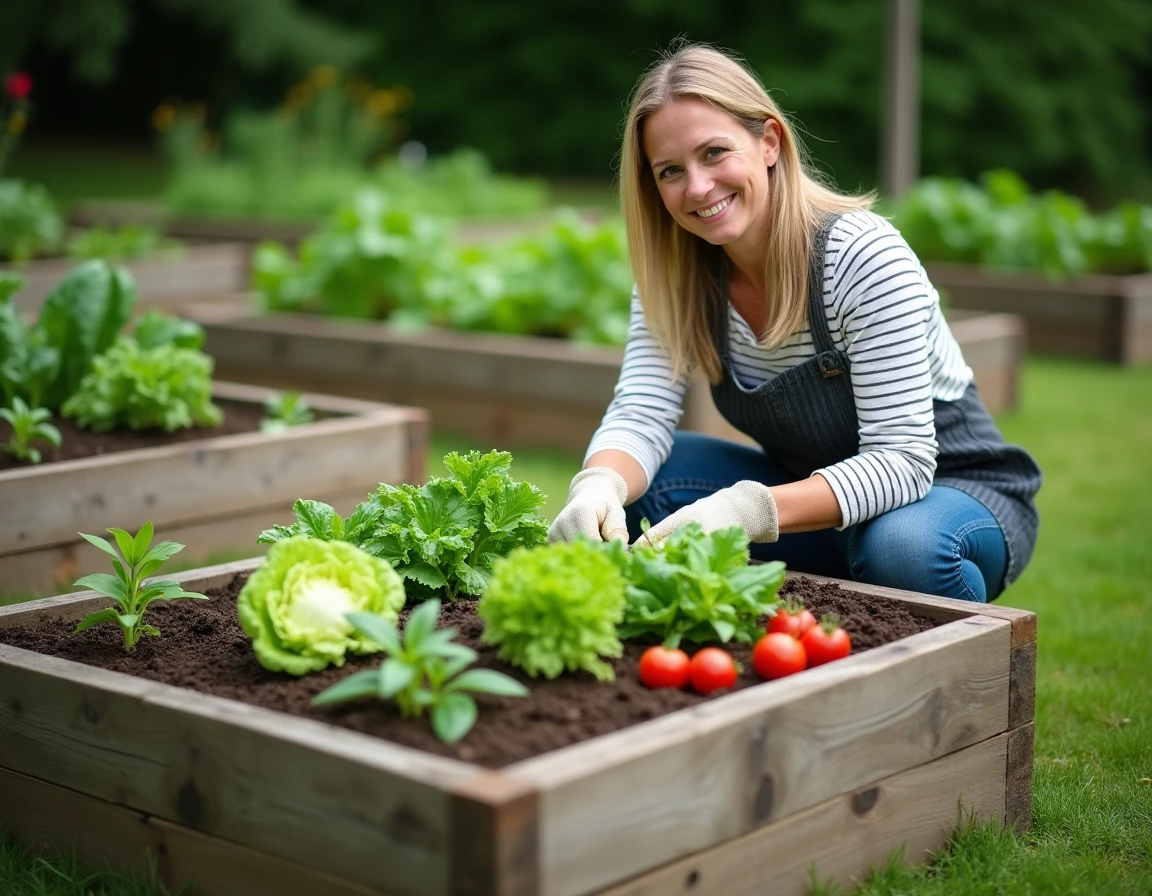
Transforming part of the garden into a nourishing space makes the place more vibrant. A raised bed made of untreated wood (douglas, larch) avoids bending down and limits the invasion of unwanted weeds. You can grow herbs, salads, and cherry tomatoes without turning the existing soil.
The raised vegetable garden works even on poor soil since it is filled with a suitable soil-compost mix. On a wide terrace or balcony, the raised container version offers the same result.
9. Hammock between two trees for a resting spot anchored in the landscape

A hammock costs little, sets up in minutes, and instantly creates a resting area. Two trees spaced three to four meters apart are enough. Without trees, a freestanding wooden support serves the same function.
The hammock invites you to look up at the canopy instead of staring at a screen. It’s a simple element that anchors relaxation in the existing landscape without altering the garden’s structure. Opt for a weather-resistant fabric that can be left outside all season.
10. Thick mulch made of local materials for a living soil

Mulching is the most cost-effective intervention in the garden. A thick layer of branch chips, dead leaves, or local straw protects the soil from drying out, nourishes underground life, and reduces weeding chores.
- Branch chips (BRF) decompose slowly and enrich the soil with humus over several months.
- Dead leaves, free in autumn, are suitable for ornamental beds and fruit tree bases.
- Cereal straw, easy to find in rural areas, works well in the vegetable garden between rows of vegetables.
Generously mulching cuts watering frequency in half during the summer. Renew the layer once or twice a year depending on the decomposition rate. The soil remains loose, cool, and teeming with life, which directly benefits the installed plants.
Every garden has its own constraints: exposure, area, budget, soil type. The ten ideas described here can be combined. A raised vegetable garden at the foot of a climbing plant screen, a hammock under the pergola, mulched paths leading to the pond: it’s the assembly that creates the haven of peace, not a single isolated arrangement.